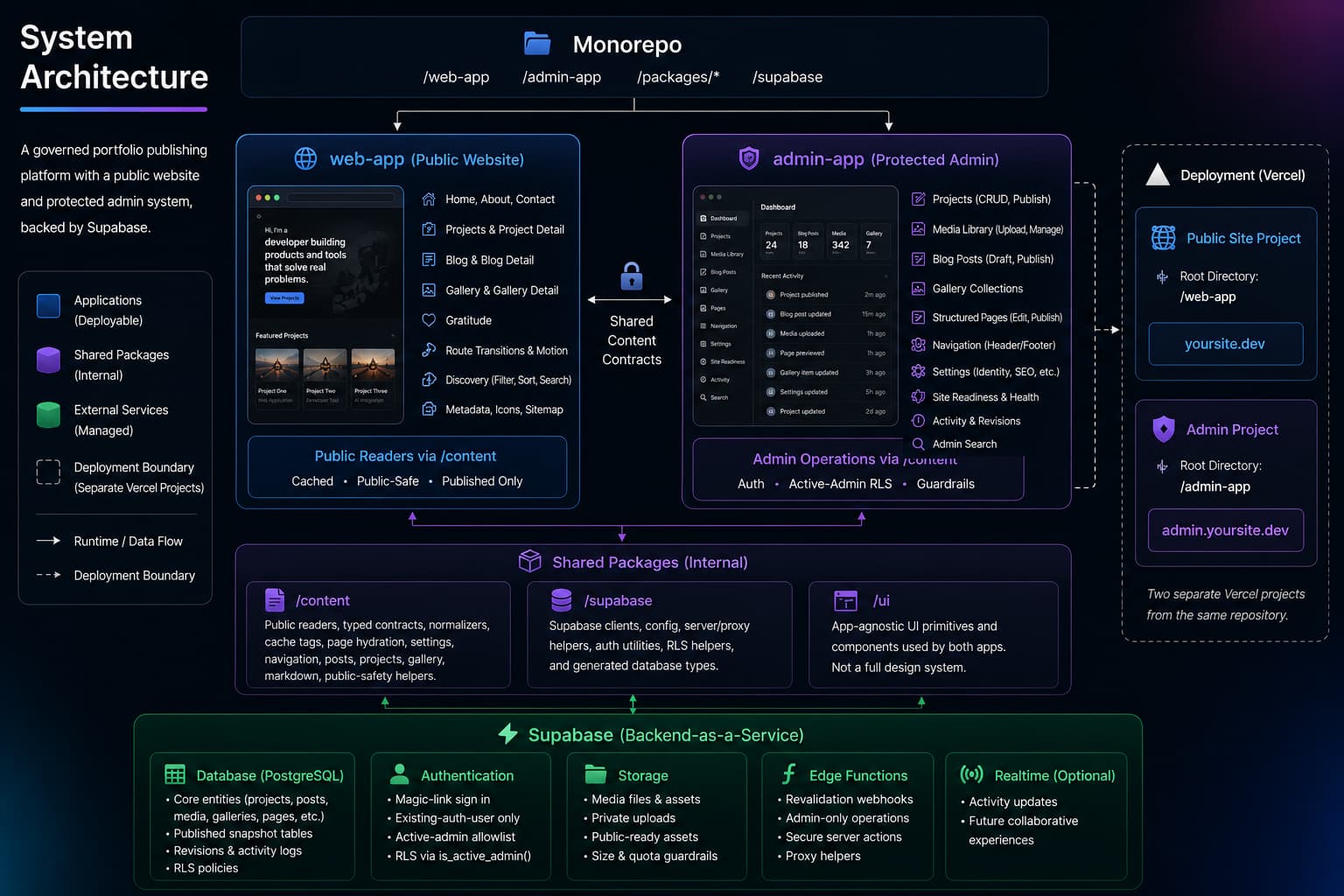
A full-stack personal portfolio platform
BW Portfolio
🪪 Portfolio Summary BW Portfolio is a full-stack personal portfolio platform built to present my software work with...
Full-Stack DevelopmentNext.jsReact
View project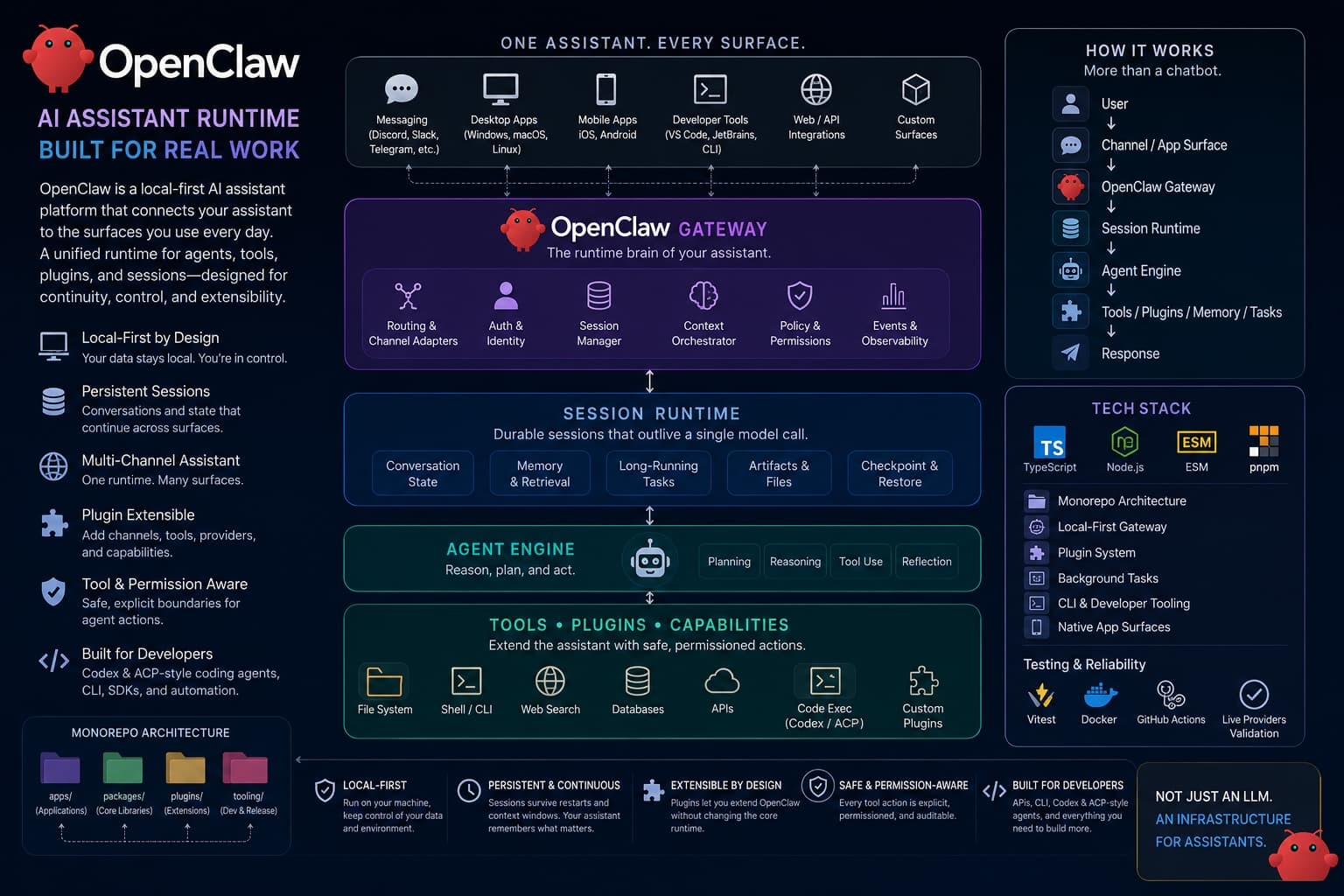
openclaw_exploration attached to OpenClaw Exploration.
Project detail
Project description
OpenClaw is a local-first AI assistant platform that goes beyond the usual “chatbot in a browser” model. It is structured around a Gateway runtime that coordinates agent sessions, messaging channels, plugins, tools, background tasks, developer workflows, and native application surfaces.
My work with OpenClaw focused on studying and reverse-engineering how a production-grade AI assistant platform is architected. Rather than simply using an AI framework, I explored how persistent assistant infrastructure is designed: how sessions continue across conversations, how plugins extend capabilities, how tools are permissioned, how channels connect to a unified runtime, and how coding-agent systems such as Codex or ACP-style agents fit into the larger architecture.
This project strengthened my understanding of AI systems as runtime platforms. The key takeaway was that the LLM is only one part of the product; the surrounding architecture, session layer, tool system, plugin model, and execution environment are what turn a model into a durable assistant.
OpenClaw is a local-first personal AI assistant platform. It is designed to connect an AI agent to the surfaces a user already uses, including messaging platforms, desktop applications, mobile clients, developer tools, and local automation workflows.
The repository suggests an architecture where the assistant is not tied to one interface. Instead, the Gateway acts as the center of the system. Channels, tools, plugins, sessions, background execution, and native apps connect into that runtime.
My exploration treated OpenClaw as an AI infrastructure case study. The main question was: how do you build an AI system that behaves less like a website chatbot and more like a personal operating layer?
Most AI applications are presented as single chat interfaces: a user sends a message, the model replies, and the conversation remains trapped inside that surface. That approach is useful, but limited. Real assistants need continuity, tool access, background execution, permission boundaries, local context, and the ability to work across multiple interfaces.
OpenClaw addresses this broader problem by separating the assistant runtime from any single client. Messaging channels, developer tools, native applications, and automation systems can all connect to the same underlying assistant infrastructure.
The purpose of my work was to understand the architectural patterns behind this kind of system: what belongs in the model, what belongs in the runtime, what should be delegated to plugins, and how durable agent sessions are coordinated over time.
At a high level, OpenClaw routes user interaction through a channel into a Gateway-managed runtime. A message might originate from a desktop app, mobile surface, messaging platform, or developer tool. The Gateway resolves the conversation, maps it to an agent session, prepares the runtime context, applies tool and permission boundaries, executes the agent turn, and delivers the response back through the appropriate surface.
A basic chatbot flow looks like this:
User → Model → Response
OpenClaw’s architecture is closer to this:
User
  ↓
Channel / App Surface
  ↓
Gateway
  ↓
Session Runtime
  ↓
Agent
  ↓
Tools / Plugins / Memory / Tasks
  ↓
Response
That difference matters. The model provides reasoning, but the runtime provides continuity, policy, integration, state, and execution. This is what allows the assistant to behave more like persistent infrastructure than a temporary chat session.
For coding-agent workflows, OpenClaw also exposes concepts around Codex harnesses and ACP-style sessions. These patterns show that coding agents are not simply prompts wrapped around an LLM. They require runtime environments, filesystem access, tool loops, permissions, state, feedback channels, and session ownership.
The most important architectural idea in OpenClaw is that the assistant is not the model. The model is the reasoning engine, but the product is the runtime around it. OpenClaw’s Gateway coordinates sessions, channels, tools, plugins, tasks, configuration, and app surfaces so that an assistant can behave consistently across different environments.
The plugin system is another major design lesson. Instead of tightly coupling every provider, channel, or tool directly into the core runtime, OpenClaw separates external capabilities through plugin boundaries. This makes the assistant architecture feel closer to an operating system: a smaller core with expandable capabilities around it.
The session model is central to durability. Context windows are temporary, but applications need external state. OpenClaw’s architecture reflects the idea that memory and continuity must be engineered explicitly through sessions, persisted state, routing, and restoration logic.
The Codex and ACP-related parts of the project helped clarify how AI coding assistants actually work. A coding agent is not just an LLM call. It is an execution environment with tools, permissions, filesystem access, feedback loops, session identifiers, and runtime-specific behavior.
The repository also demonstrates how large AI systems need serious reliability infrastructure. Live model behavior can be nondeterministic, so the surrounding system needs deterministic boundaries, integration checks, smoke tests, mocks, and real-provider validation where appropriate.
My work on this project was an architecture and systems-learning exercise. I studied OpenClaw as a production-grade AI assistant platform to understand how modern agent systems are structured beyond a simple chat interface.
I focused on mapping the responsibilities between the Gateway, sessions, plugins, channels, providers, tools, and coding-agent harnesses. The goal was to understand where application architecture lives when an LLM is only one component inside a larger system.
I also used the project to build a stronger mental model for local-first AI infrastructure: how assistants persist across surfaces, how they safely interact with tools, how runtime boundaries prevent tight coupling, and how developer-facing AI agents connect to execution environments.
This work was less about presenting OpenClaw as something I built from scratch, and more about using it as a deep technical case study in AI platform architecture.
A simple AI app can appear to be just a prompt and a model call. OpenClaw shows that production assistant behavior requires much more surrounding infrastructure.
Solution
I analyzed the runtime layers around the model: Gateway coordination, session state, tool execution, plugin boundaries, channel routing, and background tasks. The key insight was that the runtime is the actual product architecture.
AI assistants need access to external systems, but tightly coupling every tool or integration into the core creates fragile architecture.
Solution
OpenClaw’s plugin-oriented design helped clarify how capabilities can be registered, discovered, permissioned, and isolated without making the core runtime responsible for every feature.
LLM context is temporary, but a useful assistant needs durable state across conversations, channels, and restarts.
Solution
I studied how session concepts, conversation routing, state restoration, and memory-related architecture help create continuity outside the model itself.
Coding agents are often described as “LLMs that write code,” but that framing misses the real engineering complexity.
Solution
By examining Codex and ACP-related concepts, I learned to think of coding agents as managed execution environments with tools, permissions, filesystem access, feedback loops, and session ownership.
AI output changes, provider behavior varies, and live integrations are harder to test than ordinary deterministic functions.
Solution
The repository’s testing approach showed the importance of testing the system around the model: integration boundaries, live provider probes, Docker smoke tests, mocked seams, and release validation workflows.
OpenClaw demonstrates that serious AI products are infrastructure systems. The strongest engineering signal is not the presence of an LLM, but the architecture around it: runtime orchestration, session continuity, extensible plugins, safe tool execution, multi-surface routing, and operational reliability.
This project helped me reason more clearly about agent platforms, local-first software, developer tools, and large TypeScript systems. It also changed how I think about AI applications: the model is interchangeable, but the runtime, permissions, state, and integration design determine whether the assistant is reliable.
As a portfolio piece, this work shows my ability to analyze complex software architecture, extract system design patterns, and understand how production AI assistants are built beyond prompting.
Next
A full-stack personal portfolio platform
🪪 Portfolio Summary BW Portfolio is a full-stack personal portfolio platform built to present my software work with...
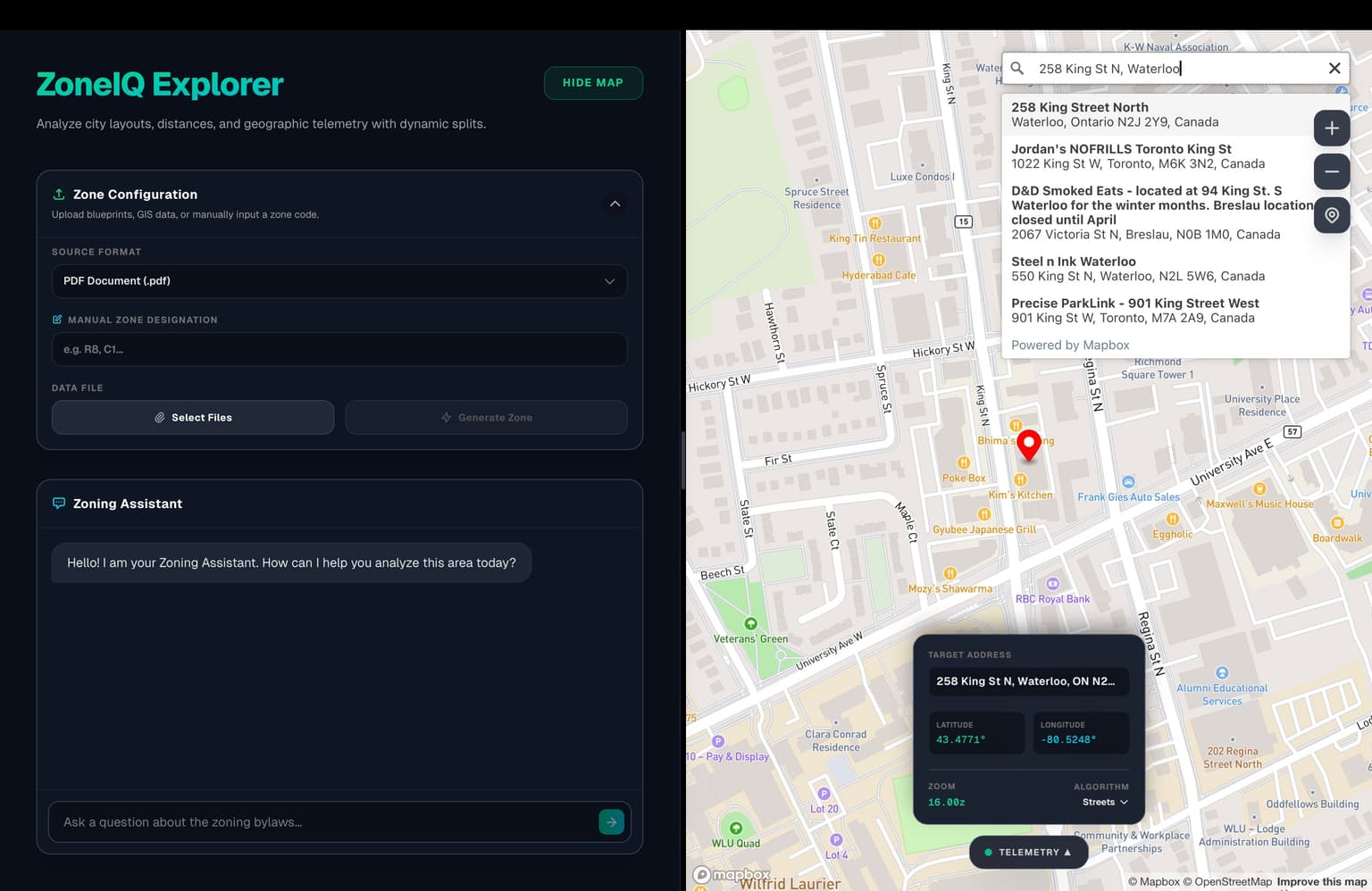
Frontend webapp developed as part of the ZoneIQ system.
🪪 Portfolio Summary ZoneIQ Explorer is a Next.js application that simplifies location-based zoning analysis by...
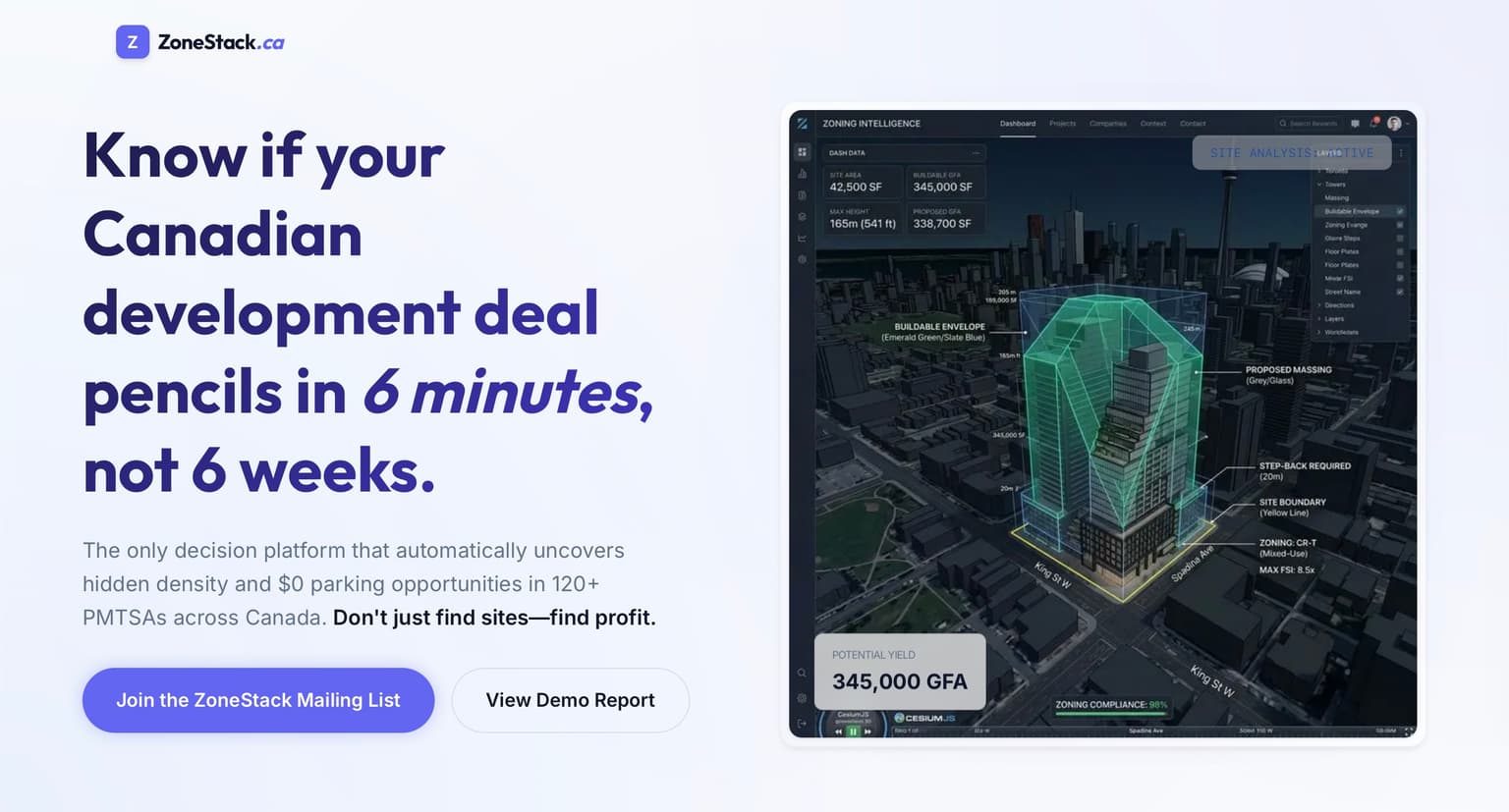
A landing page for a Prop-Tech company
🪪 Portfolio Summary ZoneStack is a Next.js landing page for a Canadian real estate decision-intelligence product...